
Concorde Staff


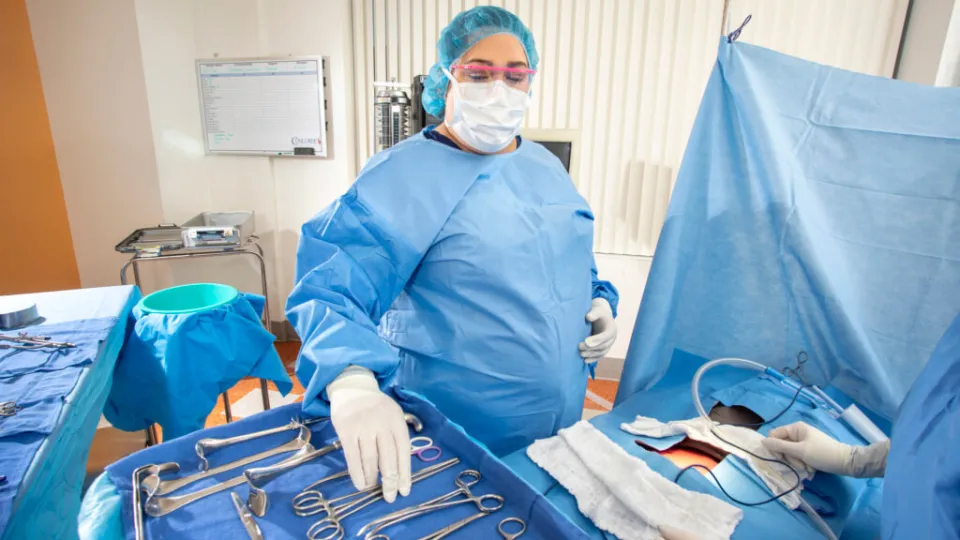
A surgical technologist plays a critical role in the operating room. They prepare the surgical area, sterilize and arrange the equipment, prep the patient, and assist the surgeon throughout the procedure. If you want to work in an operating room, this career path can help you get there.
Educational Requirements for Surgical Technologists
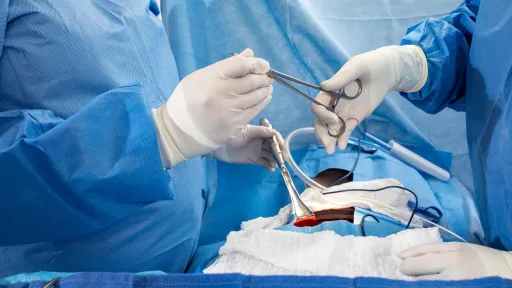
A surgical technologist's education and training can help equip them for the unique responsibilities and challenges of this job. Postsecondary training, such as the Surgical Technology Associate Degree program at Concorde Career College, may give students the opportunity to learn and practice the knowledge and skills they need for this position.
This job requires knowledge of the mechanics of the human body's external and internal structures, as well as surgical techniques. Surgical technologists must also understand the principles of microbiology to adequately sterilize patients, equipment, and surgical fields to prevent infection.
Surgical technology programs typically cover:
- Anatomy
- Physiology
- Microbiology
- Medical terminology
- Sterile field preparation
- Surgical instrument handling
- Surgical field maintenance
- Patient care
Programs include both classroom and clinical instruction, where clinical hours provide hands-on experience in real-world surgical environments. Surgical technology certificate programs are usually 12 months long, while associate degree programs may take two years to complete.
Students may have the opportunity to advance their careers as surgical technologists by pursuing an associate degree with Concorde. It's possible to complete the Surgical Technologist Associate Degree program in as few as 17 months at select campuses, comprising of as few as 68 credit hours (74 on the Memphis campus) and 570 clinical hours of surgical technologist study and training.
Learn how to become a surgical technologist with credit hours and hands-on surgical tech training so you can chart your path to an exciting future.
Certification and Licensing for Surgical Technologists
There are no mandatory nationwide standards for the certification and registration of surgical technologists. Many states have adopted requirements, with the following having mandatory laws regarding the education, certification, or registration of surgical technologists:
- Connecticut
- Idaho
- Indiana
- Massachusetts
- Nevada
- New Jersey
- New York
- Oregon
- Pennsylvania
- South Carolina
- Tennessee
- Texas
- Virginia
Arkansas, Colorado, Illinois, North Dakota, and Washington's registration regulations take different approaches to specific requirements. In states where there are no legal requirements for surgical technologists, employers usually implement standards to ensure that students demonstrate competency. Hospital bylaws include credentialing procedures and oversight to safeguard patients and the facility.
It's important to check local laws and regulations to determine the qualifications required in a particular state to practice as a surgical technologist. If there are no laws in place, it's best to pursue certification to obtain the Certified Surgical Technologist or the Tech in Surgery-Certified credentials.
Certified Surgical Technologist
The CST credential is administered by the National Board of Surgical Technology and Surgical Assisting. The CST exam has 175 multiple-choice questions, 150 of which are scored. Twenty-five unscored questions are randomly distributed throughout the text for statistical evaluation. To pass the CST test, candidates need to answer 98 of the 150 scored questions correctly.
Candidates who do not pass the CST exam may retake it up to three times in a calendar year with no waiting period.
Certification is renewed every two years by passing a certification exam or by providing proof of approved continuing education programs. To retain CST accreditation with CE, candidates must earn 30 credits every two years.
Tech in Surgery-Certified
The National Center for Competency Testing administers the TS-C credential. Similar to the CST, the TS-C exam includes 150 scored and 25 unscored questions. The majority, 92%, of the test is standard four-option multiple-choice questions, with 8% featuring alternatives such as drag-and-drop questions.
TS-C certifications are renewed annually and require the completion of at least 14 CE hours.
Essential Skills and Qualities for Surgical Technologists

Surgical technologists require a balance of technical and soft skills. To succeed as a surgical technologist, students should possess the following skills and qualities—lacking in any of these areas will require extra focus on that skill set throughout the training program. Candidates should aim to excel in all of these areas before accepting a job as a surgical technologist.
Attention to Detail
Because they're responsible for maintaining a sterile field and surgical instruments, surgical technologists need to be meticulous in their daily activities. Procedures include maintaining a one-inch border surrounding sterile surfaces with the assumption that unsterile areas cannot touch anything within the border.
Physical Stamina
Surgical technologists may spend long hours standing attentively throughout a procedure, so they must have the stamina to stay on their feet for extended periods when it's impossible to take a break. They may need to position patients for surgical procedures, which requires an appropriate amount of strength.
Dexterity
Handling small, delicate, or sharp objects as a surgical technologist necessitates dexterity to enable quick, safe conveyance to the surgeon or other health care professionals. They're also responsible for arranging surgical trays, setting up surgical equipment, prepping the patient, retracting tissues, and applying dressings, all of which require a steady, controlled hand.
Stress Management
Surgical technologists must perform well under pressure, as they're often employed in high-stress, fast-paced environments. Life-or-death situations can arise in the operating room, and they need to respond calmly and quickly. Knowing some stress-management techniques can help decompress from the demands of this job.
Communication Skills
As a surgical technologist, it's important to communicate clearly with the patient, surgeon, and others on the health care team. Good listening skills enable quick and accurate responses to requests for surgical tools and assistance, while potential concerns can be communicated promptly and confidently.
Work Environment and Physical Requirements
According to the Bureau of Labor Statistics, 71% of surgical technologists work in hospitals. Physicians' offices employ 10%, with another 11% working in outpatient care centers. Surgical technologists wear complete personal protective equipment, including sterile gowns, caps, gloves, booties, and masks, when working. This helps protect them from potential exposure to infectious diseases and hazardous materials.
Surgery technologists have higher injury and illness rates compared to most other occupations, with injuries occurring from overexertion, slips, falls, or improper lifting techniques.
Surgeries can happen at any time of day or night, and surgical technologists may be scheduled for irregular hours or long shifts at night, on weekends, and on holidays. Shifts are normally eight or 12 hours long. Most surgeries take 30 to 120 minutes, but more complex surgical procedures can take several hours. The longest recorded surgery lasted 103 hours when a team of 20 doctors separated conjoined twins.
Career Outlook and Advancement Opportunities
The job outlook is good for surgical technologists, with the BLS projecting a 4% job growth between 2024 and 2034, slightly higher than the average of 3% for all U.S. occupations. CE is required for certification, meaning that surgical technologists can constantly learn and refine their skill sets. They may find a specialty that appeals to them and pursue specialization in areas such as:
- Neurosurgery
- Obstetrics/gynecology
- Orthopedics
- Ophthalmology
- Open-heart surgery
- Plastic surgery
- Trauma
- Urology
- Oral surgery
- Vascular surgery
A career as a travel surgical technologist is an option for those wanting to explore new parts of the country. This involves taking short-term contracts at various hospitals and health care facilities, filling a vital role while exploring new places. Travel jobs in health care typically include compensation for travel and housing.
Preparing for a Career as a Surgical Technologist
Surgical technologists play an important role in health care teams by preparing and assisting surgeons during procedures. If you want a front-row position in the operating room, this could be a fulfilling and exciting career option for you. Through Concorde's Surgical Technology Associate Degree program, you may be able to acquire the skills necessary to develop your career as a surgical technologist. Contact us today for more information on pursuing a surgical technologist career.
U.S. Bureau of Labor Statistics. Occupational Outlook Handbook: Surgical Assistants and Technologists: Work Environment. https://www.bls.gov/ooh/healthcare/surgical-technologists.htm#tab-3
Popular Mechanics. "What Was the Longest Surgery Of All Time?". https://www.popularmechanics.com/science/health/a20571/longest-surgery-of-all-time/
U.S. Bureau of Labor Statistics. Occupational Outlook Handbook: Surgical Assistants and Technologists: Job Outlook.
https://www.bls.gov/ooh/healthcare/surgical-technologists.htm#tab-6
Take The Next Step Towards a Brighter Future
Interested in learning more about our Surgical Technology program?
We have a Concorde representative ready to talk about what matters most to you. Get answers about start dates, curriculum, financial aid, scholarships and more!
Related Articles
View All


Latest Articles
View All