
Concorde Staff


Florida is one of the fastest-growing states in the United States, and with that population growth comes an increasing demand for qualified health care professionals, especially registered nurses. This demand has led to a wide range of flexible and hybrid RN training options across the state. Aspiring nurses can choose from traditional on-campus programs or innovative hybrid learning models combining online coursework with hands-on clinical experience.
This article explores the career outlook for RNs in the state as well as the main types of RN programs in Florida, which include Associate Degree in Nursing, Bachelor of Science in Nursing, accelerated BSN, and RN-to-BSN options, along with their typical admission requirements. Learn about the benefits of RN training online, the importance of clinical training, how programs prepare students for the National Council Licensure Examination for Registered Nurses exam, and what to expect after graduation.
Types of RN Programs in Florida
Florida offers several types of RN programs that suit different backgrounds and career goals. Here's a breakdown of the options:
- Nursing (pre-licensure programs): Students who wish to work as a nurse or progress into an RN position will first need to complete a pre-licensure program in nursing. Concorde Career Institute offers an associate degree program in Jacksonville that can be completed in as few as 21 months.
- Nursing diploma: Train to become a licensed practical nurse or licensed vocational nurse. Concorde offers a Practical Nursing Diploma program in Jacksonville that can be completed in as few as 13 months.
- BSN: A bachelor's degree program with a broader curriculum, including leadership, research, and public health, this course of study leads to more career advancement opportunities.
- Accelerated BSN: Designed for those with a bachelor's degree in another field, these intensive programs may be completed in as few as 12-18 months.
- RN-to-BSN: For licensed RNs with an ADN, these flexible RN-to-BSN training programs (often online or hybrid) help nurses advance their education and qualify for higher-level positions.
Read More: How to Transition from Practical Nursing to Registered Nursing
Admission Requirements for RN Programs
While requirements vary based on the program and institution, most Florida RN programs expect a candidate to have these prerequisites:
- A high school diploma or equivalent
- A minimum GPA (often 2.5 to 3.0, depending on the program)
- A 2.0 or higher in prerequisite courses such as biology, chemistry, and anatomy
- Standardized test scores, such as the SAT (above 1649 with three sections or 1044 with two sections), the ACT (above 21), or the Test of Essential Academic Skills (58.7 or a summative score of 192.3). Some schools may allow the Health Education Systems, Inc. Admission Assessment exams or the Postsecondary Education Readiness Test as alternatives.
- Background checks and proof of relevant immunizations
Concorde's RN-to-BSN program requires an ADN from a State Board of Nursing-approved program and an active RN license to enroll. Successful applicants will receive a block transfer credit and complete additional semester credit hours throughout the program. The transferability of credits is at the discretion of the receiving institution.
Read More: What Is RN to BSN? Understanding a Bachelor of Science in Nursing
Flexible and Hybrid Learning Options

Concorde provides two options for aspiring RNs: a blended program offered through the Jacksonville campus and a fully online program offered through the Kansas City campus (not available through Florida campuses). Both pathways let students complete coursework remotely while fulfilling clinical and lab requirements in person. Depending on the program, students can learn online, in person, or through a mix of both. This flexible model provides:
- Flexibility for working students or those with family commitments
- Ability to complete coursework at your own pace
- Access to online resources, discussion forums, and academic support
- Reduced travel and associated costs
Concorde's flexible nursing education programs in Florida are licensed by the Florida Board of Nursing .
Read More: Navigating the Path To Becoming an RN: Educational Pathways and Licensure Requirements
Clinical Experience and Hands-On Training

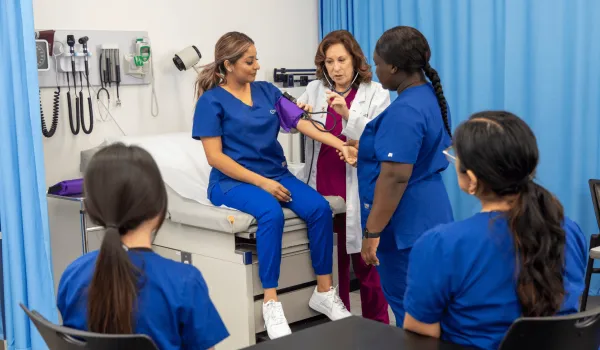
Clinical training is a key part of RN education. Nursing programs provide students with practical and hands-on nursing experience through:
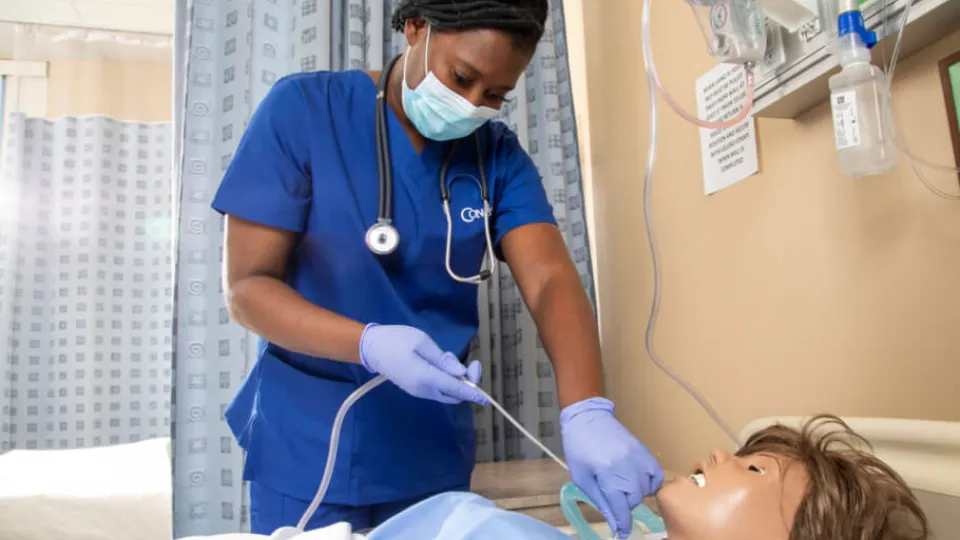
- Simulation labs equipped with special computerized mannequins
- Clinical rotations in hospitals, long-term care facilities, and community health centers
- Experience with direct patient care under supervision
- Partnerships with local health care providers for practical experience
Florida requires at least 50% clinical training for ADN programs and 40% for BSN programs, with a maximum of 50% of clinical hours allowed via simulation. Keep in mind that clinical placements may require travel and flexible scheduling.
NCLEX-RN Preparation and Licensure
Graduates must pass the NCLEX-RN exam to pursue a career as a licensed RN in Florida. This national standardized test is administered by the National Council of State Boards of Nursing. RN programs prepare students for the exam with structured learning and practice tests. Passing the NCLEX-RN shows graduates have the know-how and skills they need to work in entry-level nursing.
Licensure costs include two main components: a $110 RN/PN application and licensing fee to the Florida Board of Nursing and a $200 exam fee to Pearson VUE, totaling $310. Background checks or other additional services may cost extra. Florida's first-time NCLEX-RN pass rate is 84.9%, slightly below the national average of 91.2%.
Career Prospects for RNs in Florida
The job outlook for RNs in Florida is promising. The state's growth and aging population continue to increase the demand for health care professionals, especially nurses. RN employment is projected to grow by 5% from 2024 to 2034, faster than the average for most occupations. Approximately 166,100 openings are projected every year across the decade. This is expected to result in part from current nurses changing careers or leaving the workforce to retire.
RNs in Florida can work in various settings, including hospitals, outpatient clinics, schools, and community health centers. With further education, they can specialize in areas such as pediatrics, oncology, or critical care. Continuing education is required for license renewal, up to 27 hours per two-year period, including courses in medical error prevention and human trafficking.
Read more: How To Advance in Nursing: Exploring Advanced Options
Pursue a Career as an RN in Florida
Florida's wide range of programs and flexible learning formats make it easier than ever for aspiring nurses to pursue their RN credentials. Its nursing schools offer the support, flexibility, and clinical experience an aspiring nurse needs to succeed, whether just beginning their nursing journey or looking for career advancement with an RN-to-BSN program. Nursing is a fulfilling and impactful career. A nurse with the proper education can play an important role in the Sunshine State's health care system. Start today by contacting an admissions representative at Concorde.
Frequently Asked Questions
Here are some frequently asked questions about RN training in Florida.
What Are the Typical Admission Requirements for ADN and BSN Programs in Florida?
Prospective nursing students should have at least 60 credits (excluding PE credits) and a total GPA of 2.7, with a minimum grade of 2.0 or higher. Students may not earn a 2.0 (C) in more than two prerequisite courses. For BSN programs, applicants need a minimum overall GPA of 3.0 and a C or better in all prerequisite coursework.
What Are the Most Common Work Settings for RNs in Florida?
Most RNs in Florida work in hospitals, health clinics, community health centers, schools, rehab facilities, surgical centers, correctional facilities, or long-term care facilities.
How Do Florida's RN Employment Numbers Compare to Other States?
Florida has many employed RNs, ranking third overall in the U.S. after California and Texas.
What Are the Continuing Education Requirements for Renewal of a Florida RN License?
Nurses must complete 24 to 27 hours of CE every renewal period to renew an RN license in Florida. This includes specific mandatory courses on topics such as medical errors, nursing laws, human trafficking, and recognizing impairment in the workplace. There is also a one-time HIV/AIDS CE requirement for the first renewal and a domestic violence CE requirement for every third renewal.
What Are the Clinical Hour Requirements for RN Programs in Florida?
Florida RN programs require at least 50% of the course to be clinical training. Some programs require at least 90 clinical hours to meet licensing requirements. These hours are typically shared across various nursing specialties, such as surgical, obstetrical, pediatric, and psychiatric/mental health nursing. Additionally, the Florida Board of Nursing mandates specific CE hours, including two hours on medical error prevention and two hours on laws and rules in nursing, for license renewal.
Biernacka-Lievestro, J., & Fall, A. (2025, March 5). Population Growth in Most States Outpaced Long-Term Trends in 2024. Pewtrusts.org; The Pew Charitable Trusts. https://www.pewtrusts.org/en/research-and-analysis/articles/2025/03/05/population-growth-in-most-states-outpaced-long-term-trends-in-2024
U.S. Bureau of Labor Statistics. (2024, August 29). Registered Nurses: Occupational Outlook Handbook. Bls.gov. https://www.bls.gov/ooh/healthcare/registered-nurses.htm
Florida Board of Nursing» Registered Nurse (RN) - Licensing, Renewals & Information. (n.d.). Florida Board of Nursing. https://floridasnursing.gov/renewals/registered-nurse-rn/#tab-ce
Imed Bouchrika. (2023, June 27). Best States to Work as a Nurse for 2025. Research.com. https://research.com/careers/best-states-to-work-as-a-nurse
Petagno, C. (2009, September 25). New Simulators Give Nursing Students Life-Like Practice. University of Central Florida News | UCF Today. https://www.ucf.edu/news/new-simulators-give-ucf-nursing-students-life-like-practice/
Fees & Payment. (2024). NCLEX. https://www.nclex.com/fees-payment.page
WUSF. (2025). Wusf.org. https://wusf.org/text/health-news-florida/2025-02-14/there-positive-signs-amid-florida-dismal-performance-nursing-exam
Take The Next Step Towards a Brighter Future
Interested in learning more about our Nursing (Pre-Licensure) program?
We have a Concorde representative ready to talk about what matters most to you. Get answers about start dates, curriculum, financial aid, scholarships and more!
Related Articles
View All


Latest Articles
View All