
Concorde Staff


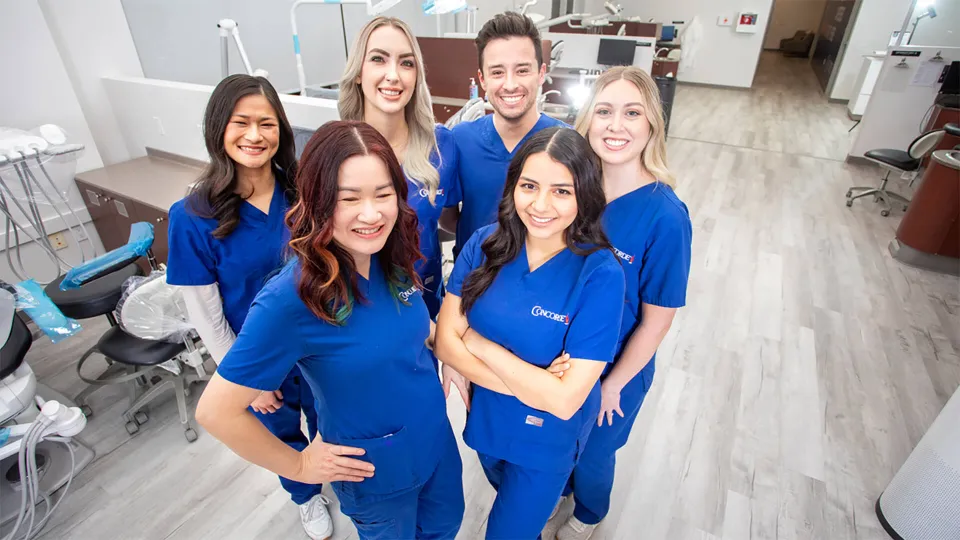
Dental hygienists provide essential preventative care and treat patients for oral diseases, such as gingivitis. These highly trained individuals have a license to practice dental hygiene. They work in private dental practices, public health programs, and sometimes practice independently. According to the Bureau of Labor Statistics, dental hygienist roles are projected to grow by 7% from 2024-2034, which is much faster than the average for all occupations. This guide explores common prerequisite courses, relevant experience, and other helpful tips for pursuing a successful career in dental hygiene.
Common Prerequisite Courses for Dental Hygiene Programs
Dental hygiene program requirements vary depending on the school and type of program, but most require the same basics. Prerequisite courses needed for dental hygiene programs include foundational subjects such as biology, chemistry, anatomy, physiology, psychology, microbiology, and English. Students need a minimum GPA of around 2.5 or higher in these courses. Other subjects, such as nutrition, sociology, and math or statistics, may also be helpful. Students should note that prerequisite science courses need to be completed within the last five years before applying to dental hygiene school.
Gaining Relevant Experience
While work experience is not always required, it may strengthen a student's application compared to the competition. Some programs may require or strongly recommend that students have a certain number of observation hours (e.g., at least 20 hours) in a dental setting, even if this is not work experience per se.
There are various ways to gain relevant and valuable experience. Students may pursue job-shadowing opportunities with dental professionals to learn more about the job and gain hands-on skills. It may also be an excellent networking opportunity. Volunteering or working at a dental clinic or a relevant community health organization is another excellent option. Highlighting any transferable skills from previous work experience in the application is also strongly recommended.
Concorde Career College's Dental Hygiene Associate Degree is an excellent option, as it offers the opportunity for hands-on training for extraoral and intraoral exams, periodontal and dental exams, patient history reviews, risk assessments, and vital sign checks. All of these may prepare graduates for working as a dental hygienist after graduation.
Admission Tests and Requirements

Admission requirements vary according to the program and institution. Students looking to pursue dental hygiene training will need a 2.5 GPA or higher in prerequisite subjects, but some programs may require or accept SAT or ACT scores.
Entrance Tests
Applicants may need to complete the Admission Test for Dental Hygiene or the Dental Hygiene Assessment Exam, also known as the Health Education Systems Incorporated Entrance Test, published by Evolve/Elsevier. These are standardized national exams used to assess the skill levels of prospective dental hygiene students. The former allows four hours and 50 minutes to complete and is available year-round. The latter allows three hours and 45 minutes to complete the test.
Many programs may require or recommend cardiopulmonary resuscitation certification, recent immunizations, and background checks, depending on the institution. Certain programs may have their own requirements. As part of the program, graduates will be eligible to sit for the National Board Dental Hygiene Examination after graduation, the costs of which are included in the program. Passing this exam is typically required for employment as a dental hygienist in most states.
Letters of recommendation from relevant authorities, such as science teachers and dental professionals, may strengthen an application. Students may also need to write a personal statement or essay detailing why they wish to pursue this career.
Tips for a Successful Application
Dental hygiene programs in the United States are generally considered competitive, particularly for the best-known universities or accelerated online training programs. Many have an acceptance rate of just 12%-30%. Space is limited, and competition is fierce. Here are some tips for improving your chances of a successful application:
- Start planning early, and create a timeline for completing prerequisites and gathering your application documents.
- Aim for a GPA above 2.5, but ideally closer to 3.0, especially in science courses.
- Gain as much work experience as you can in health care or dental settings.
- Prepare thoroughly for any required entrance exams, such as the ADTH.
- Ask for strong letters of recommendation from people who can speak to your academic abilities and potential as a dental hygienist, such as science teachers (biology, chemistry, physics), dentists you have shadowed, and previous employers.
- Apply to multiple programs to increase your chances of getting accepted.
- Focus on attention to detail in your application, and ensure you meet all application deadlines.
Write a Powerful Personal Statement
An effective personal statement may make all the difference. This is your opportunity to go beyond academic achievements and showcase unique personal qualities, motivations, and experience relevant to the role. Getting this right may increase your chances of acceptance. Include the following details:
- Demonstrate your unique personal characteristics and why they're beneficial for the role.
- Discuss your passion for oral health and commitment to patient care.
- Use specific, personal anecdotes.
- Share your experience in the dental industry.
- Focus on depth over breadth (quality over quantity).
- Be unique and authentic.
Read more: Qualities of a Dental Hygienist
Attend Industry Events
Knowledge is power. Attending information sessions or open houses at schools of interest may be helpful to learn about:
- Program overview and structure
- Admission requirements and process
- Curriculum details
- Clinical training opportunities
- Career outlook and opportunities
- Financial information and estimated costs
In addition to the information gained, it may also be a good way to network with relevant professionals in the industry.
Pursue a Career as a Dental Hygienist
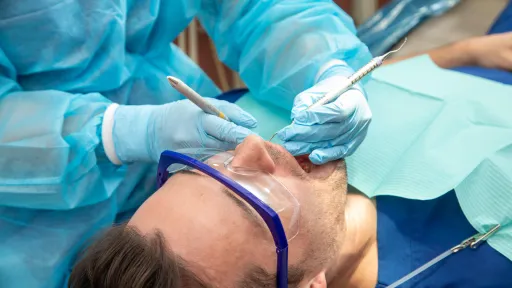
If you're passionate about pursuing a career as a dental hygienist, start early and prepare thoroughly. Work hard to get a high GPA, and sign up for relevant work experience that may strengthen your application. Concorde offers a Dental Hygiene Associate Degree, accredited by the Commission on Dental Accreditation. Graduates will be eligible to sit for the NBDHE after graduation.
You'll gain vital skills in oral examinations, patient history, and risk assessments. A rewarding career awaits those who successfully complete their dental hygiene education. Take the first step toward a rewarding career in dental health care by contacting an admissions representative with any questions. This program is offered at select campuses. Please check with your local campus for program availability.
Frequently Asked Questions
Here are some frequently asked questions about dental hygiene training.
How long do science prerequisites typically need to be completed before applying to dental hygiene programs?
It depends on the institution. Most programs require science courses to be completed within the last five years before application. Some may allow this to be longer, while others may require this to be more recent.
How many observation hours in a dental setting do most programs recommend or require?
It depends on the institution, but generally speaking, the more observation hours and work experience, the better. Most programs require at least 20 hours of observation or job shadowing at an absolute minimum.
What is the DHAE, and how does it differ from other entrance exams?
The DHAE or HESI Entrance Test is a standardized entrance exam required by many U.S. dental hygiene programs. It differs from other entrance exams, such as the ATDH, in its focus and knowledge. The DHAE assesses reading comprehension, language, math, and science, while the ATDH specifically assesses skills relevant to dental hygiene education.
What types of immunizations are typically required for dental hygiene program applicants?
Many programs require or recommend shots for measles, mumps, hepatitis B, rubella, pertussis, tetanus, influenza, diphtheria, and varicella. It's best to check the specific program requirements for more information.
Who are the best people to ask for letters of recommendation when applying to dental hygiene programs?
The best people to write letters of recommendation for a dental hygiene program are science teachers, dentists you've shadowed, and employers who can attest to your responsibility and professionalism.
How far in advance should prospective students start planning for dental hygiene program applications?
The earlier the better. Prospective students should start planning for dental hygiene program applications at least one year in advance. This allows time for completing prerequisite coursework, preparing for standardized exams, such as the Test of Essential Academic Skills, and focusing on developing the skills and knowledge needed for a successful application.
U.S. Bureau of Labor Statistics. (2023, September 6). Occupational outlook handbook: Dental hygienists. https://www.bls.gov/ooh/healthcare/dental-hygienists.htm
American Dental Association. (n.d.). Admission test for dental hygiene (ATDH). https://www.ada.org/education/testing/exams/admission-test-for-dental-hygiene-atdh
Tennessee State University. (n.d.). Dental hygiene admissions exam (DHAE) information sheet [Brochure]. https://www.tnstate.edu/dentalhygiene/documents/DHAE%20Info%20Sheet.pdf
Machado, K. P. (2023, July 11). Which dental schools have the highest acceptance rates? Dimensions of Dental Hygiene. https://dimensionsofdentalhygiene.com/which-dental-schools-have-the-highest-acceptance-rates/
de, S. H., Macarelli, C., & Lam, A. (2018, September 11). Vaccination recommendations for oral health professionals. Decisions in Dentistry. https://decisionsindentistry.com/article/vaccination-recommendations-for-oral-health-professionals/
Take The Next Step Towards a Brighter Future
Interested in learning more about our Dental Hygiene program?
We have a Concorde representative ready to talk about what matters most to you. Get answers about start dates, curriculum, financial aid, scholarships and more!
Related Articles
View All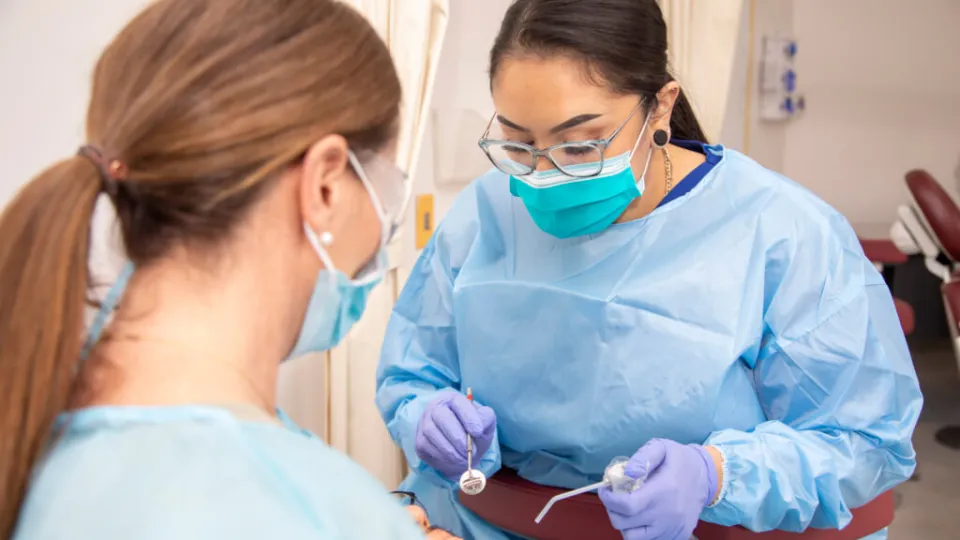

Latest Articles
View All