
Concorde Staff


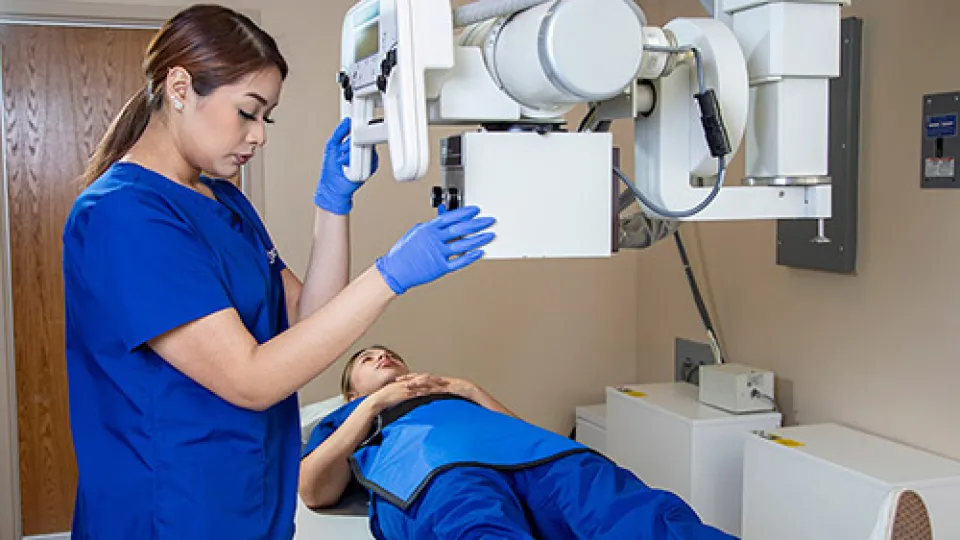
Radiologic technologists play an important role in diagnosing the extent of the patient's problem. They are the healthcare workers who handle imaging tests so doctors can see what's going on inside the body. They are responsible for the imaging equipment, help patients feel safe, and explain each step in a calm, easy way. That's how they end up with the clear images doctors rely on.
Who is a Radiologic Technologist?
Radiologic technologists are trained to help patients with X-rays, CT scans, MRI scans, and other imaging tests. They explain the entire process, help patients get ready, and make sure they are positioned correctly for each image. They set up the equipment, follow safety rules, and try to keep patients comfortable, especially when someone feels nervous. Their work needs both technical skill and a lot of empathy.
Core Daily Responsibilities
Radiologic technologists often complete tasks such as:
- Explaining the imaging procedure and answering patient questions
- Checking and preparing imaging equipment to ensure it works correctly
- Setting up the exam room and organizing the space for each patient
- Positioning patients so that the area needing imaging can be captured clearly
- Collecting images that physicians or radiologists use for interpretation
- Monitoring patient comfort and safety throughout the exam
- Administering small amounts of imaging agents when needed for certain scans
- Assisting with specific radiation treatments ordered by a provider
- Using ultrasound technology for exams that rely on sound waves
- Measuring bone density with specialized equipment
- Cleaning equipment and exam rooms between patients
- Completing patient records, paperwork, and supply restocking
How Their Work Supports Healthcare
Radiologic technologists play a direct part in helping providers make informed decisions. Clear images depend on good positioning and careful use of the equipment, so technologists play a big part in avoiding repeat exams and keeping things moving smoothly. Their calm explanations and patient approach help ease anxiety, which makes it easier for patients to stay still and comfortable. This helps get better images overall.
By combining communication skills with technical knowledge, they support safe, effective, and timely imaging across different healthcare environments.
Where Radiology Techs Commonly Work?
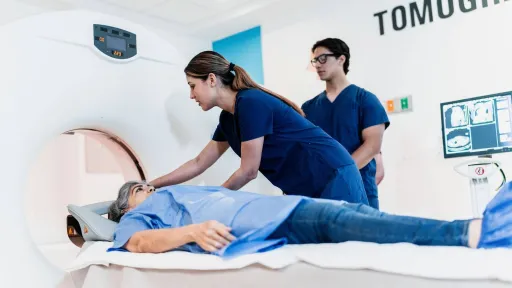
People usually ask 'Where do radiologic technologists work?', and the answer is that they can be found in many different healthcare settings. They may find jobs in hospitals, outpatient imaging centers, mobile imaging units, and diagnostic labs.
Hospitals
In hospitals, radiologic technologists play an important role on the care team. They help with all kinds of imaging needs, which include imaging requirements in case of emergencies, inpatient exams, during surgeries, and regular checks. Their work helps doctors get the information they need quickly and safely.
In operating rooms, technologists may assist with intraoperative CT imaging by positioning patients, running the scanner safely, and helping provide images surgeons need. Hospital departments tend to be busy and fast-paced. Technologists may rotate through general X-ray, portable imaging, or specialized areas such as CT or MRI, depending on the employer.
Because hospitals support patients around the clock, shifts may include evenings, weekends, nights, or on-call rotations.
Outpatient Imaging Centers
Outpatient centers perform scheduled exams such as X-rays, CT scans, MRIs, DEXA, or mammograms. These centers usually focus on non-emergency imaging and follow regular business hours.
The pace is steady and predictable, and patients usually arrive for routine or follow-up exams. Technologists may work with a smaller team and perform imaging in a quieter setting where appointments guide the flow of the day.
Medical Laboratories and Diagnostic Clinics
Some radiologic technologists work in diagnostic clinics that handle imaging for patients who are sent in by their physicians. They may use X-ray, CT, MRI, or bone density equipment and send the images to a radiologist to look into. These clinics usually serve multiple physician offices, so technologists may see many different kinds of cases throughout the day.
Mobile Imaging Units
Mobile imaging teams bring equipment to nursing homes, long-term care facilities, and communities that may not have local imaging services. Technologists working in mobile units usually handle setup, scanning, and documentation on their own. This environment can involve travel, independent work, and adapting to new spaces, which some technologists enjoy.
Therapy and Cancer Treatment Centers
Radiation oncology technologists help support cancer treatment plans by delivering targeted radiation treatments ordered by a radiation oncologist. They help position patients, locate the treatment area, and operate specialized machines.
Because patients often return for multiple appointments, technologists may develop supportive relationships with them over time. Their work is a mix of technical skill with compassion, along with steady attention to patient comfort and safety.
Specialty Roles and Their Work Environments
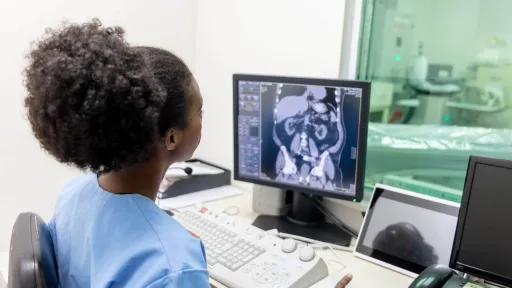
Radiologic technologists can work in different specialty areas, depending on what their employer needs and additional role-specific preparation.
In 2024, radiologic technologists and technicians held about 228,000 jobs, and about 60% of these positions were found in hospital settings [1].
CT Technologist
CT technologists usually work in hospitals or advanced imaging centers. They take cross-sectional images of different areas of the body. Some scans are routine, while others help doctors see injuries or urgent health problems. Their main job is to get clear images and use radiation safely, while helping patients stay calm and comfortable.
MRI Technologist
MRI technologists get job roles in hospitals, outpatient centers, and MRI centers. MRI uses magnetic fields, not radiation, to get detailed images of soft tissues and organs. If patients feel uneasy or claustrophobic, technologists explain each step, reassure them, and help them stay calm.
Mammography Technologist
Mammography technologists focus on breast imaging. Some patients come in for regular checkups, while others visit because they have an issue. They use specialized equipment to get clear images that help doctors check breast health and spot any changes early.
Interventional Radiology Technologist
Interventional radiology technologists work with doctors during minimally invasive, image-guided procedures. Most of this work happens in hospitals where tools like fluoroscopy machines are used to see what is happening inside the body in real time. During the process, they operate the imaging equipment and capture live pictures of blood vessels, organs, or the exact spot the doctor is working on. These images assist the doctor as they move catheters, wires, or other tools.
Some technologists work in vascular interventional radiology, helping with procedures like angioplasty, placing stents, or treatments that treat blood clots. Others support cardiac interventional procedures, which focus on the heart and nearby blood vessels.
What It Is Like to Work in Different Imaging Settings
The day of a radiologic technologist may look different depending on the workplace. Outpatient imaging centers usually run on scheduled appointments, so the pace is more predictable and steady. Many patients come in for routine exams, helping to promote a calm and organized setting.
Hospitals offer a different rhythm. Imaging teams support emergency room patients, trauma cases, and inpatient care, which means the pace can shift quickly. A technologist may move from a simple X-ray to a time-sensitive scan within minutes.
Schedules also vary. Hospitals usually require staffing at all hours, including nights and weekends. Outpatient centers usually follow standard weekday hours. Team structures differ, too. Hospitals tend to have large teams that include physicians, nurses, and emergency staff. Outpatient centers usually operate with smaller teams.
Career Outlook: Jobs Across Settings
Individuals interested in pursuing a career as a radiologic technologist may complete a Radiologic Technology associate degree in as few as 20 months.
Employment for radiologic technologists is projected to grow about 5% from 2024 to 2034 [2]. This growth shows continuous use of imaging services across hospitals, outpatient centers, and other healthcare settings.
Day in the Life of a Radiologic Technologist
A radiologic technologist's shift can vary depending on the workplace. In a hospital emergency room, the pace is usually fast. A technologist might complete a routine exam one moment and then quickly move on to an urgent trauma scan the next. Hospital shifts may involve working through the night, on weekends, and being available on call.
At an outpatient imaging center, the day usually follows scheduled appointments. Patients arrive at a set schedule, exams are routine, and the overall pace is steady. Each environment brings different types of patient interaction and teamwork.
Take The Next Step Towards Your Future
Radiologic technologists play a vital role in patient care, combining technical skill with compassion to produce images that providers rely on for accurate diagnosis and treatment. If you are ready to pursue a hands-on career in medical imaging, Concorde Career College offers Radiologic Technology education programs designed to help you build practical skills and prepare for entry-level opportunities. Take the next step toward a future in healthcare by exploring what Concorde can offer you today.
Footnotes:
1. U.S. Bureau of Labor Statistics. (2025). Radiologic technologists and technicians. https://www.bls.gov/ooh/healthcare/radiologic-technologists.htm#tab-3
2. U.S. Bureau of Labor Statistics. (2025). Radiologic technologists and technicians. https://www.bls.gov/ooh/healthcare/radiologic-technologists.htm#tab-6
Take The Next Step Towards a Brighter Future
Interested in learning more about our Radiologic Technology program?
We have a Concorde representative ready to talk about what matters most to you. Get answers about start dates, curriculum, financial aid, scholarships and more!
Related Articles
View All


Latest Articles
View All